How AI Is Changing the Investment Banking Analyst Role in 2026
Discover how AI is changing the investment banking analyst role in 2026, from automating repetitive tasks to enabling deeper analysis, client work, and AI oversight.
There is a shift happening inside investment banks that is changing the analyst role faster than most people realise.
The question is no longer whether AI will affect investment banking analysts. That has already happened. Goldman Sachs research suggests AI could automate around a quarter of current banking work hours, with many junior-level tasks such as financial modelling, note-taking, spreadsheet analysis, and presentation formatting among the areas most exposed.
The more important question is what investment banking analysts will actually spend their time doing when these tasks can be completed faster with AI.
And the answer is more nuanced than simply saying AI will replace junior bankers.
What Investment Banking Tasks Are Being Automated?
AI for investment banking analysts is not removing the analyst role. Instead, it is changing how analysts complete the repetitive tasks that have traditionally taken up much of their working day.
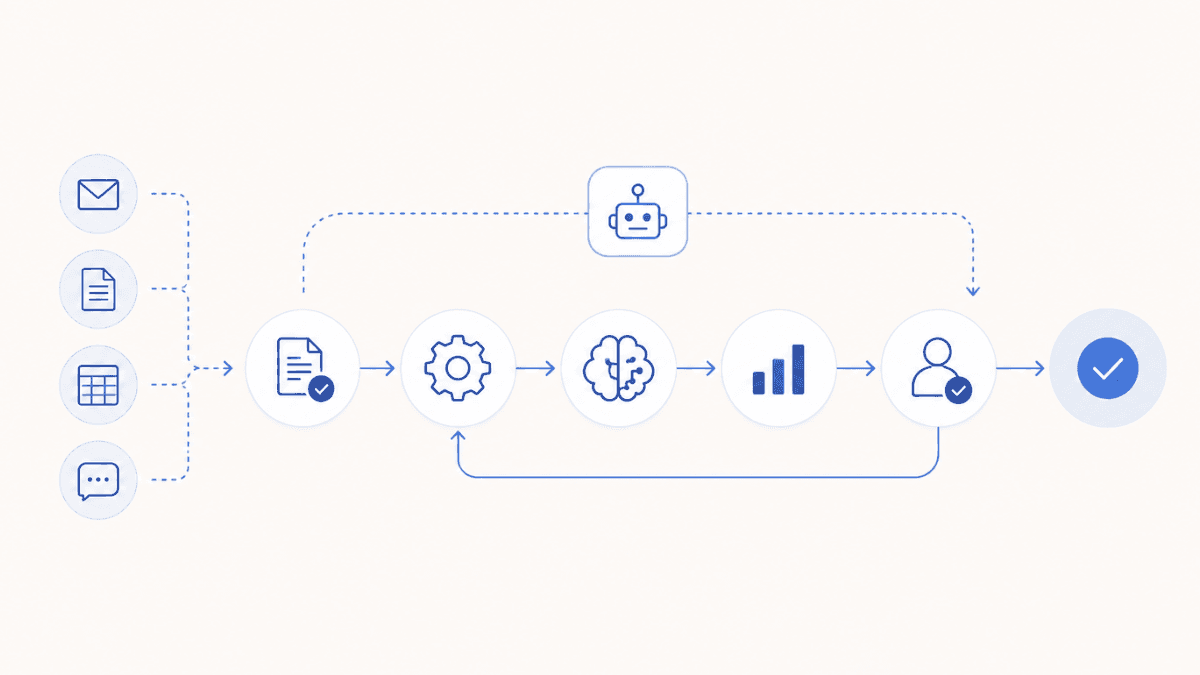
Financial statement data extraction, model population, comparable company research, initial data collection, first drafts of pitch books and investment committee materials, and document reviews are all examples of work where AI can reduce manual effort.
For years, analysts performed these tasks because there were few practical alternatives. AI is now providing one.
That means the value of an analyst's time can shift toward work that requires financial understanding, judgement, and context.
McKinsey's QuantumBlack leadership has also highlighted how banks are increasingly redeploying junior employees into technical and AI-focused roles instead of treating automation purely as a headcount reduction exercise. The bigger opportunity is to move analysts toward work where human judgement remains essential.
What Are Investment Banking Analysts Doing Instead?
When AI handles more of the mechanical work, those hours do not simply disappear. In firms that are adopting digital transformation in investment banking effectively, they are being redirected toward higher-value responsibilities.
More client exposure, earlier.
Analysts can spend more time understanding client situations instead of spending most of their day preparing materials. As AI reduces the time required for production work, junior bankers can potentially get involved in strategic discussions earlier in their careers.
More focus on analytical judgement.
A completed financial model is no longer necessarily the final step in the process. AI can help populate models, organise information, and run scenarios, but analysts still need to determine whether the assumptions make sense and what the results actually mean.
This changes the analyst's role from simply producing an output to understanding, challenging, and communicating that output.
AI oversight and quality control.
Another responsibility is emerging as AI becomes part of everyday banking workflows. Analysts need to review AI-generated outputs, verify sources, identify errors, check whether conclusions are supported by the underlying data, and improve the workflows used to generate those outputs.
This is becoming an important part of working effectively with AI in finance.
What Does This Mean for Investment Banking Firms?
The investment banking analyst role in 2026 is increasingly different from the role analysts performed five or six years ago.
Traditional financial skills still matter. Analysts need to understand financial statements, valuation, financial modelling, transactions, and the fundamentals of investment banking. AI does not remove the need for that knowledge. In many ways, it makes that knowledge more important because analysts need to recognise when an AI-generated answer is wrong or incomplete.
At the same time, firms are looking for analysts who can work effectively with AI tools, structure the right prompts, manage large amounts of information, validate outputs, and turn complex analysis into useful recommendations.
Firms using AI banking analyst software effectively are therefore developing two skill sets at the same time: strong financial fundamentals and strong AI collaboration skills.
By early 2026, 40% of financial institutions reported that AI had increased their overall profitability. The important lesson is that successful AI adoption is not simply about purchasing a new tool. It is about redesigning how teams work once that tool becomes part of the process.
That is particularly important for AI for junior bankers. The firms that benefit most will be those that decide in advance which tasks AI should handle, which responsibilities should remain with analysts, and where human judgement creates the most value.
The future of investment banking is therefore unlikely to be AI versus analysts. It is more likely to be analysts using AI to do better work, faster.
Brexy's AI for Investment Banking is built around this shift, helping analysts and deal teams reduce mechanical production and information-processing work while keeping bankers in control of the final output.